

After about 5 months of war, deadlocks, and successive military operations, Washington faces the most difficult question: how can it end a war it cannot win, yet cannot abandon? The fragile truce collapsed and negotiations have frozen, hostilities resumed only to pause again, American casualties are rising, energy prices are putting pressure on the global economy, and domestic political patience within the US is wearing thin. As Donald Trump sees his options narrowing dramatically, the conflict enters its most dangerous turning point, where every decision could lead either to an uncontrolled escalation or a politically painful retreat.
The strategic advantage
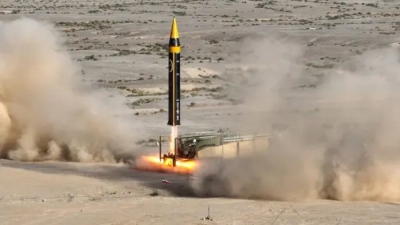
Following the collapse of the three-month truce, both sides returned to hostilities this month, though without any clear signs that either is gaining a real strategic advantage. As the war appears bogged down, the primary development right now seems to be the gradual weakening of support from its few backers in the United States. Although American operations have "frozen" after nearly two consecutive weeks of night strikes, the Trump administration continues to leave the door open for further escalation. So, what might come next?
Will Republicans start pressing harder to end the war?
Even those who initially abstained from criticizing the war are now publicly questioning how much longer it can continue. Fox News host Laura Ingraham stated on Monday night: "Time is pressing President Trump to get out of this war before voters go to the polls. This is causing great concern among many Republicans. ... Republicans cannot allow this to turn into an endless distraction, especially if they want to win in November." House Speaker Mike Johnson, on Tuesday, underlined the importance of the war, adding however: "Now we need to finish it."
Criticisms, pressures and... fears
Louisiana Senator Bill Cassidy, speaking Sunday on CNN's State of the Union, said: "In my opinion, the President had an opportunity to achieve the original goals, which I agreed with, and wrap this up. However, that has not happened to date." Yet, there appears to be no easy way for Trump to end the war right now. Iran showed no willingness to accept even a relatively favorable peace agreement (the memorandum of understanding), while neither new American strikes nor threats seem to have bowed Tehran. Are these Republicans ready to push Trump to withdraw if there is no nuclear deal? And what happens if Iran continues to control the Strait of Hormuz? The latter, in particular, would represent a major failure, difficult to frame otherwise. If prominent Republicans begin arguing that it is time to withdraw even without an agreement or without resolving the issue of the Strait, it will mean they seriously fear the political consequences. Trump himself, however, insisted again on Tuesday that the midterm elections "will have no effect on me."
Will recent troop deaths worsen public perception of the war?
According to a CNN analysis, Trump has made it crystal clear that he worries the first deaths of American soldiers in the war since March - four since regular strikes resumed - may further erode public support. On one hand, he constantly compares the casualty numbers favorably (currently 18 American service members) against older wars that had much higher death tolls. On the other hand, he claims - without presenting evidence - that the fallen soldiers and their families supported the war effort. (At least one family member has stated otherwise.) Data indicates there is good reason for the President's visible anxiety. A Reuters/Ipsos poll in March showed that 42% of Republicans and 53% of independent voters stated that potential deaths or injuries of American soldiers in the Middle East would make them more likely to oppose the war.
18 dead, over 600 wounded
The Pentagon quietly updated its casualty database over the weekend, logging more than 140 additional wounded personnel, bringing the total to over 600. Even a smaller death toll compared to previous wars could have a disproportionately large impact. This is because Americans had already turned against this war even during the months when there were no fatalities. After all, rising fuel prices proved to be a significant factor on their own. And given that many Americans do not seem to understand the purpose of the war or believe it will yield a positive result, losing soldiers in the context of this conflict becomes even harder to accept.
Will Trump escalate?
So far, Trump has consistently resisted further escalation. However, as the stalemate widens, it is likely that he and his aides may view escalation as the only alternative to a potentially humiliating retreat. There are, of course, serious reasons explaining his hesitation up to this point. Trump has repeatedly threatened to strike Iranian infrastructure, even over the past week. However, doing so could constitute a war crime. Another option would be an attempt to seize strategically vital areas, such as Kharg Island or the area surrounding the Strait of Hormuz - pivotal points for oil exports and significant to the already strained Iranian economy. Yet, such a move would likely require deploying ground forces, which, according to a CNN poll in March, 68% of Americans reject compared to just 11% who support it. Furthermore, it would entail an increased risk of more American casualties and a longer-lasting war.
The massive attack
Trump told Axios on Thursday that he is considering "a massive attack," which he described as "bigger than ever." However, he has made similar statements many times in the past and subsequently backed down, despite not achieving what he sought from Iran. At some point, it seems likely that he and his team will conclude that threats are no longer producing results. Trump suspended strikes over the weekend, with US Ambassador to the UN Michael Waltz stating that the President is "giving space for talks." However, CNN and other media reported that one reason the administration avoids a major escalation is that Vice President JD Vance and Chairman of the Joint Chiefs of Staff Gen. Dan Caine have expressed concerns about the risk of escalation, while Caine has also raised issues regarding available US ammunition stockpiles.
How much higher will fuel prices go?
One of the most alarming developments last week was that the Houthis, Iran's allies in Yemen, announced a blockade of the Bab al-Mandeb Strait and began targeting Saudi ships in the Red Sea. This region functions as a major alternative route to the Strait of Hormuz, so any disruption to navigation further burdens an already strained global oil market. By Thursday, the price of oil topped $100 per barrel for the first time since May. This occurred while the average price of gasoline in the United States had already crossed $4 per gallon again. To a large extent, Trump's bargaining power is directly tied to this last figure. If fuel prices rise significantly above $4 per gallon, it will be difficult to convince not only the American public but also his allies that the war is justified.
Will Trump lower his expectations even further?
One of Trump's biggest problems is that he promised far too much. He had stated he would accept nothing less than the "UNCONDITIONAL SURRENDER" of Iran and that his goal was to permanently prevent Tehran from acquiring nuclear weapons. He had even spoken of a potential uprising by the Iranian people that would overthrow the country's leadership. He has already scaled back these targets considerably, as evident from the terms of the now-inactive memorandum of understanding. The question is whether he will settle for even less in order to disengage from the war. For example, would he accept simply reopening the Strait of Hormuz without a nuclear deal? He has occasionally argued that Iran is already essentially denuclearized and can be monitored from space. (Of course, Trump had also claimed a year ago that Iran's nuclear program was "completely eliminated," yet war followed anyway.) Trump has also hinted at times that the Strait of Hormuz is not a real problem for the United States or, at least, that it concerns other countries more. Could he decide he can simply walk away and leave those with a greater stake to handle the situation? That would be deeply damaging to US relations with other countries, but maintaining good relations with allies is not typically high on Trump's list of priorities.
Will Congress finally take action?
Despite Congressional Republicans appearing increasingly worried about the midterms, they remain far from exercising their constitutional powers regarding the war. However, there have been some developments. One avenue would be to deny or delay war funding. The House of Representatives approved a relevant bill last week, but its fate in the Senate remains uncertain. A second path is to continue passing resolutions restricting Trump's powers through war powers resolutions. The House voted on such a proposal for a second time on Thursday, while the Republican-controlled Senate has already moved in that direction once. Republicans in Congress have generally given Trump wide latitude regarding the war.
Bypassing the limits
However, the administration appears to be bypassing the 60 to 90-day time limits set by the War Powers Act, arguing that these are essentially two distinct conflicts due to the intervening truce. Some Republican lawmakers are hinting that they are growing weary of this reasoning. "Stopping a war and restarting it a few days later means nothing for the Constitution," South Carolina Representative Nancy Mace told CNN last week. Alaska Senator Lisa Murkowski made similar observations during a hearing last week. Bill Cassidy, who recently shifted his stance from supporting limits on Trump's war powers to granting the President more time, added Sunday that Congress may "soon" need to take action.
www.bankingnews.gr





Σχόλια αναγνωστών